

Pediatric Feeding Therapy for Kids!
Helping children enjoy mealtimes with expert pediatric feeding therapy. Our specialists support safe eating, healthy growth, and confidence at the table at every stage.

The Power of Feeding Therapy
If you’re here, you’ve probably wondered why something as basic as mealtime feels so hard.
Maybe your child eats the same five foods. Maybe dinner ends in tears, gagging, or a standoff at the table. Maybe you dread restaurants, birthday parties, and holidays because you never know what they’ll accept. You’ve tried hiding veggies, offering rewards, and staying patient... and still, something feels off.
That’s where feeding therapy comes in.
Feeding therapy isn’t about forcing bites or fixing a “picky” child. It’s about helping kids feel safe, curious, and capable around food, so eating becomes something they can enjoy instead of something they have to survive.
At VITA Pediatrics, our feeding specialists look at the whole child: mouth, body, senses, and emotions, because everything is connected. Trouble chewing may stem from weak oral-motor skills. Food refusal can reflect sensory sensitivity. Mealtime meltdowns often come from fear, not defiance.
Because when a child feels comfortable with food, everything changes.
Mealtimes get calmer.
New foods feel less scary.
Nutrition and growth improve.
And families get to sit down together and actually enjoy it.
When feeding therapy is done well, progress isn’t just seen in sessions, it’s felt at the dinner table, in lunchboxes, and in everyday moments that finally feel easier.
At VITA, feeding is not just about food.
It’s how children nourish their bodies and join in family life FULLY.
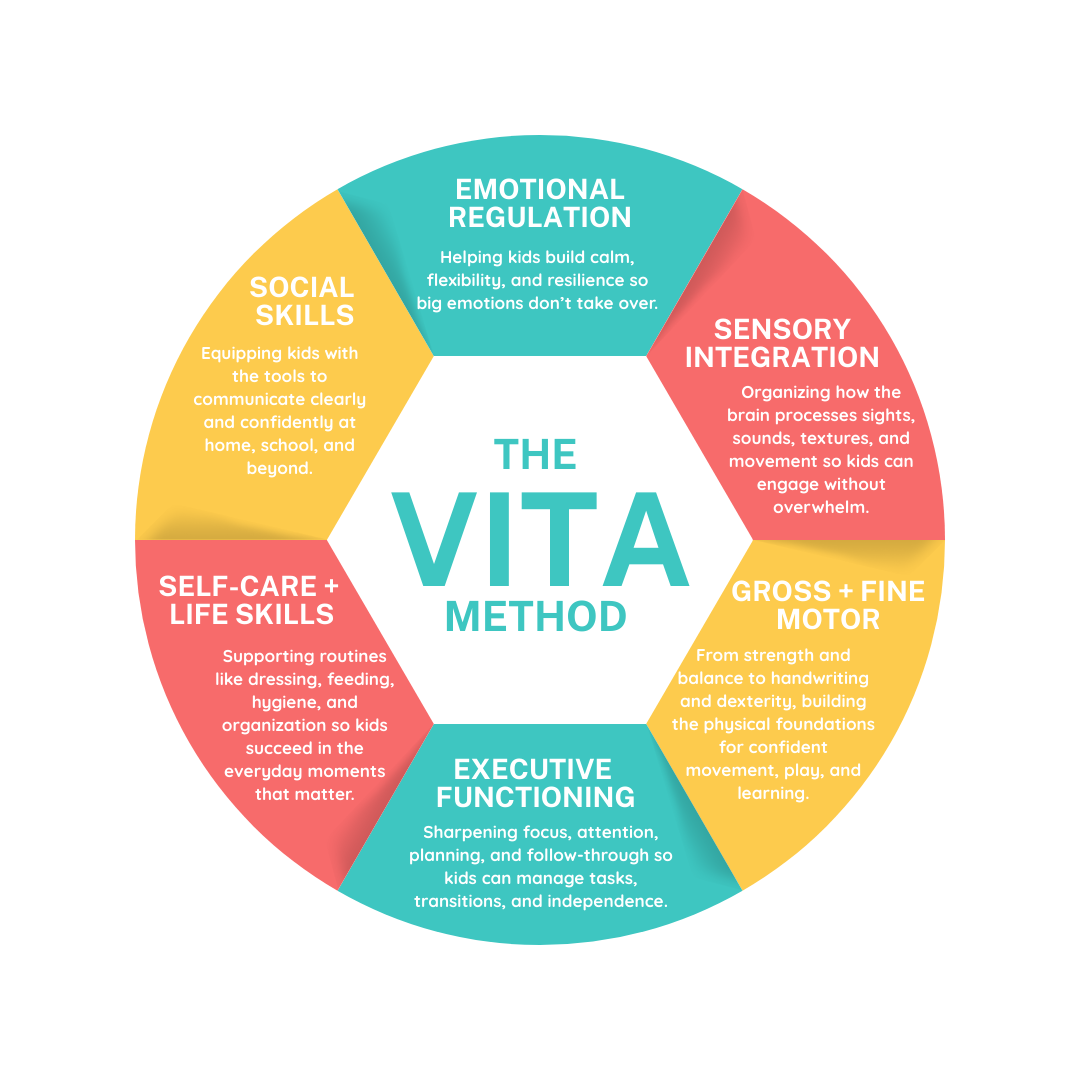
The Core Areas of Growth at VITA:
We’ve built our therapy at VITA around six core areas of development, because treating the whole child is where real change happens.
How FT Works at VITA:
We don’t believe in cookie-cutter therapy. Every child moves through our clear, three-step method:
1. Assess
A strengths-based evaluation that looks at the whole child, not just the symptoms. We get to the root.
2. Activate
A customized plan that’s practical, targeted, and tailored to your child and family.
3. Advance
Ongoing therapy with measurable progress that carries into home, school, and daily life.

Conditions We Treat:
At VITA Pediatrics, Feeding Therapy supports children who struggle with eating, drinking, and mealtimes. Our team looks at the whole child, including oral-motor skills, sensory responses, medical history, and family routines, to understand the “why” behind feeding challenges so children can eat safely, grow well, and enjoy mealtimes.
Picky Eating & Food Selectivity
Eating only a small number of foods (fewer than 20 accepted foods)
Refusing entire food groups, textures, or colors
Distress when new foods are on the plate
Strong preference for specific brands, packaging, or presentation
Sensory-Based Feeding Challenges
Texture avoidance (mushy, crunchy, lumpy, or mixed textures)
Sensitivity to smells, temperatures, or the feel of food on hands and face
Gagging or vomiting with certain foods
Difficulty tolerating messy play or touching food
Oral-Motor & Chewing Difficulties
Trouble chewing or moving food around the mouth
Pocketing food in the cheeks or holding food without swallowing
Overstuffing or taking very small bites
Drooling, tongue thrust, or weak lip and jaw control
Difficulty transitioning from purees to solids or from bottle to cup
Swallowing Concerns
Coughing, choking, or wet-sounding voice during meals
Frequent gagging or fear of swallowing
Recurrent respiratory concerns related to eating or drinking
Difficulty drinking thin liquids
Infant & Early Feeding Concerns
Difficulty with latch, bottle feeding, or sucking patterns
Slow, tiring, or messy feedings
Delayed introduction of solids
Feeding challenges related to prematurity or low birth weight
Growth & Nutrition Concerns
Poor weight gain or “failure to thrive”
Low appetite or very low volume intake
Dependence on supplements, pouches, or specific drinks
Support transitioning from tube feeding to oral eating
Mealtime Behaviors & Family Stress
Tantrums, refusals, or running away from the table
Long mealtimes, constant grazing, or distraction-dependent eating
Parents feeling anxious, pressured, or unsure how to help
Mealtime battles that affect the whole family
Neurological, Developmental & Medical Conditions
Autism Spectrum Disorder (ASD)
Cerebral Palsy (CP)
Down Syndrome and other genetic conditions
Developmental Delay / Global Developmental Delay
Sensory Processing Disorder (SPD)
Cleft lip and/or palate
Reflux (GERD), food allergies, or eosinophilic conditions
Avoidant/Restrictive Food Intake Disorder (ARFID)
Don’t See What You’re Looking For?
Not sure if Feeding Therapy is right for your child?
Feeding challenges look different for every child, and they can show up in many ways. If your child’s needs aren’t listed above but involve picky eating, trouble chewing or swallowing, gagging, mealtime stress, slow weight gain, or difficulty moving from one stage of eating to the next, there’s a good chance feeding therapy can help.
Reach out to our team and we’ll learn a little more about your child, review any history or concerns you have, coordinate with your pediatrician if needed, and help guide you toward the best next step.